


Canker sores are not contagious and can’t be transmitted through intimate contact like sharing utensils, kissing, or saliva. They are often confused with cold sores, which are contagious.
Canker Sores vs. Cold Sores
The primary difference between canker sores and cold sores is that canker sores are not caused by bacteria and aren’t viral, while cold sores are caused by a virus. There are other differences that distinguish canker sores from cold sores.
Canker sores occur inside the mouth, on the gums, cheeks, and palate. A cold sore will appear outside of the mouth, usually around or on the lips. A canker sore is small and round. It has a white or yellow center with a red border. A cold sore is a blister that will eventually crust over.
Canker sores can be caused by many external and internal factors, including stress, diet, injury, and the body’s immune response. Cold sores have one cause, and that is the herpes simplex virus (HSV-1). The healing time is shorter for canker sores than for cold sores. A canker sore will take between 7 and 14 days to heal, while a cold sore takes between 10 and 14 days to heal.
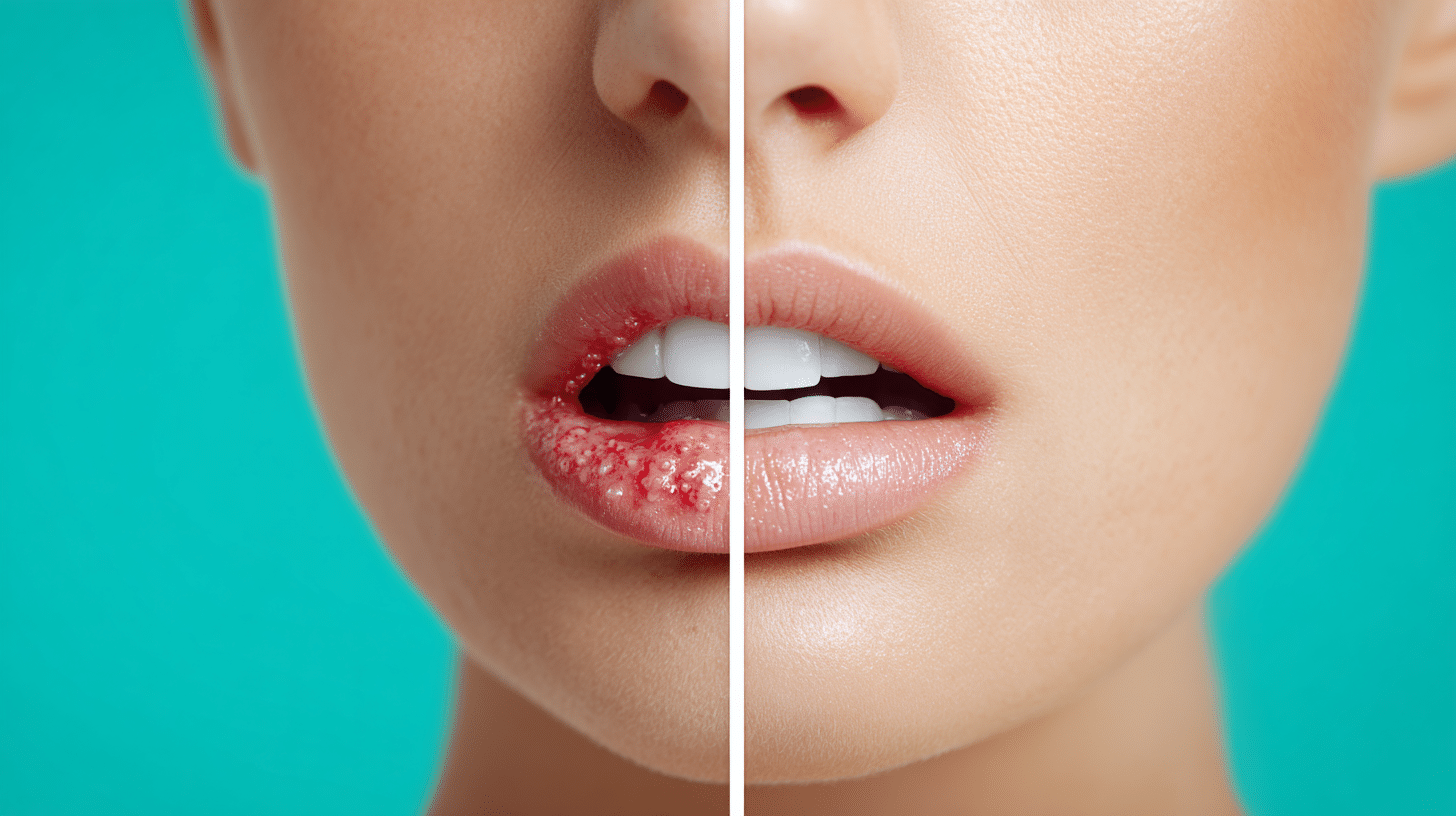
Canker Sores and Their Causes
Canker sores are not related to an infection, but can be caused by internal factors. One of the common causes is a minor mouth injury caused by accidentally biting your cheek or brushing aggressively. Some can be caused by dental work.
Foods, like highly acidic or spicy items like tomatoes, lemons, and jalapeno peppers, can also cause an irritation resulting in a canker sore. Salt and vinegar foods are well-known for causing sores.
Internal issues that cause or contribute to canker sores are stress, hormonal changes, and nutritional deficiencies. Stress weakens the body’s immune system, and that results in an outbreak of canker sores. Several may develop in the mouth and be painful.
Women going through hormonal changes like pregnancy, peri-menopause, and menopause may get canker sores. One of the more common reasons is a lack of B12, folate, or zinc.

Canker Sores as a Health Warning
Canker sores shouldn’t be dismissed. They can be a symptom of something more serious, especially if they are occurring in batches or regularly. Canker sores can show that something is wrong with your immune system, as your immune system is attacking soft mouth tissues. It could indicate underlying health issues like celiac disease, Crohn’s disease, or autoimmune disorders.
Preventing Canker Sores
Canker sores can be prevented by following the dentist’s recommendations of brushing twice daily with a soft-bristle toothbrush and using a good mouth rinse. Those with sensitive mouths should use a toothpaste without sodium lauryl sulfate (SLS) to reduce the risk of canker sores.
Other changes, including managing stress, eating nutritious meals, and avoiding trigger foods, can help prevent canker sores.

Treatment for Canker Sores
There aren’t any medical treatments for canker sores because they aren’t a virus or a bacterium. Most heal on their own. Treatments focus on pain relief, and you can do many treatments at home, including saltwater rinses and topical pain relief.
Those with severe cases should see a dentist or doctor for a prescription for corticosteroid paste. It is a mud-type paste you put on the sore that provides immediate relief.
Even though canker sores aren’t caused by bacteria, some antibacterial mouth rinses help in healing. However, they can be painful to use with canker sores because of the alcohol content. That could cause more inflammation.

Those with questions about canker sores or other mouth issues can call us. We are happy to provide information that keeps your mouth and body healthy.